
Blockchain technology has transformed how digital transactions are recorded, verified, and shared. From cryptocurrencies to decentralized finance, blockchain networks generate enormous amounts casino analytics of data every day. Understanding this information can help businesses, investors, researchers, and developers make better decisions. This is where blockchain analytics becomes valuable.
Blockchain analytics involves collecting, examining, and interpreting data stored on blockchain networks. It helps users understand transaction patterns, monitor digital assets, identify suspicious activities, and evaluate the performance of blockchain-based applications. As decentralized technologies continue to develop, the ability to analyze blockchain data is becoming increasingly important across multiple industries.
What Is Blockchain Analytics?
Blockchain analytics is the process of studying information recorded on a blockchain to identify meaningful patterns and insights. Public blockchains typically store transaction details, wallet addresses, timestamps, token transfers, and other network-related information. Analytics tools organize these records into useful reports and visualizations.
Unlike traditional databases controlled by a single organization, many blockchains operate through distributed networks. Their transaction records are maintained across multiple participants and can often be inspected publicly. This transparency creates opportunities for detailed analysis, although interpreting the information requires specialized knowledge and suitable analytical tools.
For example, blockchain analytics can help determine how frequently a digital asset changes hands, which wallets interact with a particular decentralized application, and how transaction fees change during periods of network congestion.
However, a wallet address does not automatically reveal the real-world identity of its owner. Analysts must distinguish between observable blockchain activity and conclusions that require additional evidence.
How Blockchain Analytics Works
Blockchain analytics generally follows several stages, beginning with data collection and ending with actionable insights.
1. Collecting Blockchain Data
The first step involves gathering information from blockchain networks. Analysts may use blockchain nodes, application programming interfaces, public explorers, or specialized data providers to access transaction records.
The collected information can include wallet addresses, transaction values, block timestamps, token movements, smart contract interactions, and network fees. Different blockchain networks use different data structures, so analytical systems must account for their technical differences.
2. Organizing and Processing Information
Raw blockchain data can be difficult to interpret because it consists of technical records rather than ready-made business insights. Analytics platforms clean, organize, and structure this information for further examination.
Transactions may be grouped by activity type, network, asset, or time period. Data processing also helps identify duplicate records, standardize formats, and connect related transactions.
3. Identifying Patterns
Once the information is organized, analytical methods can reveal trends and unusual behavior. For instance, analysts may identify sudden increases in transaction volume, changes in wallet activity, or movements between decentralized exchanges and other services.
Statistical analysis and machine learning can support this process by identifying patterns that deserve additional investigation.
4. Presenting Actionable Insights
The final stage involves converting analytical results into understandable information. Dashboards, charts, alerts, and reports help users evaluate blockchain activity without manually reviewing thousands of individual transactions.
These insights can support business planning, compliance reviews, security monitoring, and blockchain product development.
Major Types of Blockchain Analytics
Blockchain analytics covers several related areas, each serving a different purpose.
Transaction Analytics
Transaction analytics examines how value moves across a blockchain. It considers transaction frequency, transfer amounts, network fees, and relationships between transactions.
Businesses can use these insights to understand payment activity and evaluate how blockchain networks are being used. Researchers may also study transaction trends to understand broader changes in network behavior.
Wallet Analytics
Wallet analytics focuses on the activity associated with blockchain addresses. It can help identify recurring transactions, asset balances, interaction histories, and patterns of participation.
Wallet behavior may provide clues about different types of activity, but address ownership and intent cannot always be established from transaction records alone.
Cryptocurrency Market Analytics
Cryptocurrency market analytics examines digital asset movements, trading activity, liquidity, and other market indicators. By combining blockchain records with exchange and market data, analysts can develop a broader understanding of asset behavior.
These insights can support research and risk assessment, but historical patterns do not guarantee future market performance.
Compliance and Risk Analytics
Compliance analytics helps organizations review blockchain transactions for activity that may require further investigation. Depending on the platform and available data, systems may flag connections to sanctioned addresses, suspected scams, or other high-risk activity.
Such alerts should be treated as indicators rather than definitive proof of wrongdoing. Reliable reviews require appropriate context, accurate information, and human judgment.
Smart Contract Analytics
Smart contract analytics examines the behavior and usage of programs deployed on blockchain networks. Analysts can evaluate contract interactions, transaction failures, user activity, and operational performance.
Developers can use these findings to improve application reliability, identify unexpected usage patterns, and understand how decentralized applications serve their users.
Why Blockchain Analytics Matters
The importance of blockchain analytics extends beyond cryptocurrency trading. It offers practical advantages to organizations working with digital assets and decentralized applications.
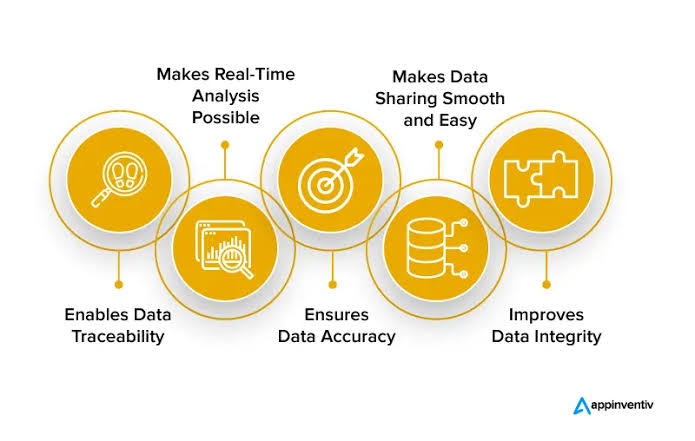
Improved transparency: Public blockchain records allow users to examine transaction histories and verify certain on-chain activities independently.
Better security monitoring: Analytical systems can flag unusual transaction patterns and potentially suspicious movements, helping security teams investigate emerging risks.
Informed decision-making: Businesses can use network activity, user engagement, and transaction trends to evaluate opportunities and plan blockchain-related projects.
Regulatory support: Financial institutions and digital asset service providers may use analytics to assist with transaction monitoring, risk-based reviews, and compliance procedures.
Operational efficiency: Automated analysis reduces the need to inspect individual records manually, allowing teams to focus on important findings.
Together, these benefits make blockchain analytics useful for organizations seeking a clearer understanding of decentralized financial activity.
Common Tools Used for Blockchain Analytics
Several categories of tools help users explore blockchain data. Their capabilities vary depending on the networks supported, data available, and intended application.
Blockchain explorers allow users to inspect individual transactions, wallet addresses, blocks, and smart contracts. They are useful for basic verification and research.
Specialized analytics platforms provide more advanced features, including transaction visualizations, address labeling, risk indicators, and network-level reporting.
Data dashboards help users monitor selected blockchain metrics over time. Developers and researchers may also use blockchain APIs, SQL-based analytics environments, and custom scripts to investigate large datasets.
When choosing a tool, users should consider data accuracy, network coverage, privacy protections, documentation, pricing, and the transparency of its analytical methods.
Challenges in Understanding Blockchain Data
Despite its advantages, blockchain analytics has important limitations.
One challenge is the sheer volume of information generated by active networks. Processing large datasets requires suitable infrastructure and efficient analytical methods.
Another difficulty involves interpreting wallet addresses. A single person may control multiple addresses, while one address may represent an exchange or shared service used by many people. Address activity alone is therefore insufficient to establish identity with certainty.
Privacy-focused technologies, cross-chain transfers, and incomplete external data can also limit visibility. Some blockchain activity may be difficult to connect across different networks or applications.
Finally, analytical results can be misleading when taken out of context. A sudden increase in transactions, for example, may reflect legitimate business activity rather than suspicious behavior. Effective analysis combines technical evidence with careful interpretation.
The Future of Blockchain Analytics
The future of blockchain analytics will likely involve more automation, improved data integration, and increasingly sophisticated analytical methods. Artificial intelligence may help researchers identify unusual patterns and summarize complex transaction histories more efficiently.
Cross-chain analytics is also becoming important as digital assets and applications operate across multiple blockchain networks. Tools that provide a more connected view of these ecosystems can help users understand asset movements that would otherwise be difficult to follow.
At the same time, privacy-preserving technologies and stronger data governance practices will influence how analytics platforms collect, process, and present information. Organizations will need to balance transparency with responsible handling of sensitive information.
As blockchain adoption expands, analytical tools are likely to become more accessible to businesses, researchers, and everyday users.
Conclusion
Blockchain analytics provides a practical way to transform complex blockchain records into useful information. By examining transactions, wallet activity, market indicators, and smart contract interactions, users can better understand how decentralized networks operate.
Although challenges such as privacy limitations, data volume, and uncertain wallet attribution remain, responsible analytical practices can improve the reliability of blockchain research. Selecting appropriate tools and interpreting findings carefully are essential for obtaining meaningful results.
As digital assets and decentralized applications continue to evolve, blockchain analytics will remain an important resource for transparency, security monitoring, operational improvement, and informed decision-making. Understanding blockchain data today can help individuals and organizations navigate the opportunities and challenges of an increasingly decentralized digital economy.