
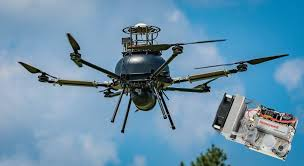
Unmanned aerial vehicles (UAVs) are becoming increasingly important across industries such as logistics, agriculture, surveillance, mapping, inspection, emergency response, and environmental monitoring. As these applications become more demanding, the need for longer Hydrogen Storage System for UAV flight times and reliable power sources continues to grow. Conventional lithium-ion batteries provide convenient energy storage, but their limited energy density can restrict UAV endurance. This has increased interest in hydrogen-based power solutions. A Hydrogen Storage System for UAV can provide a promising approach to extending flight operations while supporting efficient and dependable aerial missions.
Understanding Hydrogen Storage for UAVs
Hydrogen storage systems are designed to store hydrogen safely and deliver it to a fuel cell or another suitable power-generation system. In a typical hydrogen-powered UAV, stored hydrogen is supplied to a fuel cell, where it reacts with oxygen to generate electricity. The electricity then powers the aircraft’s propulsion system, flight controller, sensors, communication equipment, and other onboard electronics.
Unlike conventional batteries, hydrogen fuel cells can continuously generate electricity as long as hydrogen and oxygen are available. This characteristic makes hydrogen particularly attractive for UAV applications that require extended operation.
The storage component is an important part of the overall system because it must balance hydrogen capacity, weight, safety, durability, and compatibility with the UAV’s design.
Why UAVs Need Advanced Energy Storage
Flight endurance is one of the biggest challenges for many UAV platforms. Battery-powered drones can offer strong power output, but their operating time is often limited by battery capacity and aircraft weight. Increasing battery capacity can also increase overall weight, creating a difficult design trade-off.
Hydrogen has a high specific energy by mass, which makes it attractive for applications where weight and endurance are critical. A well-designed hydrogen storage system can help UAV manufacturers explore longer-duration missions without relying entirely on larger battery packs.
Extended endurance can be particularly valuable for aerial inspections, infrastructure monitoring, agricultural surveys, border observation, disaster assessment, and other missions where frequent landing and battery replacement can reduce operational efficiency.
Key Components of a Hydrogen Storage System for UAV
A complete hydrogen storage solution generally includes several important components that work together to provide controlled and reliable energy delivery.
Hydrogen Storage Tank
The storage tank holds the hydrogen and must be designed to withstand the required operating conditions. Lightweight composite tanks are often considered for aerospace applications because they can provide high strength while helping minimize additional aircraft weight.
The tank’s capacity depends on the UAV’s size, expected flight duration, power requirements, and available installation space.
Pressure Regulation System
Hydrogen may be stored at a pressure that is not directly suitable for the fuel cell. A pressure regulation system helps control hydrogen delivery and maintain appropriate operating conditions.
Reliable regulation is important because stable hydrogen flow contributes to consistent fuel-cell performance.
Fuel Cell System
The fuel cell converts hydrogen into electrical energy. Depending on the UAV design, the fuel cell may provide the primary power source while a battery or supercapacitor handles short-duration power peaks.
This hybrid approach can combine the endurance advantages of hydrogen with the rapid power response of electrical energy storage.
Monitoring and Safety Systems
Sensors and control systems can monitor pressure, temperature, hydrogen flow, and other operating parameters. These systems help identify abnormal conditions and support appropriate protective responses.
For UAV applications, monitoring equipment should be lightweight, dependable, and integrated with the aircraft’s flight and power-management architecture.
Advantages of Hydrogen Storage for UAV Applications
One of the most important advantages of hydrogen-based UAV systems is the potential for extended flight endurance. Longer operation can reduce the number of landings required during a mission and improve productivity.
Another advantage is rapid refueling. Depending on the system and infrastructure available, refueling a hydrogen-powered UAV can potentially take less time than recharging a depleted battery.
Hydrogen fuel cells can also produce electricity with low local emissions. Their primary electrochemical byproduct is water, making them attractive for applications where reduced operational emissions are important.
Furthermore, hydrogen systems can support specialized UAV missions that demand continuous operation over longer periods. This can make them particularly interesting for commercial and industrial drone operators.
Challenges of Hydrogen Storage in UAVs
Despite its potential, hydrogen storage also presents several challenges. One of the biggest considerations is storage pressure. High-pressure hydrogen storage requires specially engineered tanks, valves, regulators, and connections.
Weight is another major consideration. Although hydrogen itself is lightweight, the storage tank and supporting components add mass to the UAV. Engineers must therefore optimize the entire system rather than focusing only on hydrogen capacity.
Safety is equally important. Hydrogen is highly flammable, so storage and delivery systems require appropriate engineering controls, leak detection, ventilation, and protective measures.
Infrastructure can also be a limitation. Hydrogen refueling facilities are not as widely available as conventional battery charging stations. UAV operators may therefore need dedicated hydrogen handling and refueling arrangements.
Designing an Efficient Hydrogen UAV System
Successful UAV integration requires careful consideration of the complete aircraft architecture. Engineers need to evaluate the required flight duration, payload, propulsion power, operating environment, and mission profile before selecting a storage solution.
The storage tank should fit within the aircraft while maintaining a suitable center of gravity. Weight distribution is particularly important because changes in the location of the hydrogen tank can affect stability and flight performance.
Thermal management should also be considered because fuel cells and other power electronics generate heat during operation. Proper system integration can help maintain reliable performance under different environmental conditions.
A hybrid power architecture may provide additional benefits. In such a configuration, the fuel cell supplies steady electrical power while a battery provides additional energy during takeoff, acceleration, or other high-power events.
Applications of Hydrogen-Powered UAVs
Hydrogen-powered UAVs can be considered for a wide range of long-endurance applications. In agriculture, extended flight time can support larger-area crop monitoring and data collection. In infrastructure inspection, UAVs can remain airborne longer while examining pipelines, bridges, power lines, and other assets.
Environmental organizations can use long-endurance UAVs for monitoring forests, coastlines, wildlife habitats, and remote areas. Emergency response teams may also benefit from longer flight operations when assessing disaster-affected regions.
Logistics is another potential application. As drone delivery systems develop, longer endurance could help UAVs cover greater distances while carrying useful payloads.
The Future of Hydrogen Storage for UAVs
Hydrogen technology is continuing to develop as researchers and manufacturers work to improve storage efficiency, reduce system weight, increase durability, and enhance safety. Advances in composite materials, fuel-cell technology, pressure-management systems, and intelligent monitoring could make hydrogen-powered UAVs increasingly practical.
Future systems may also become more compact and easier to integrate into autonomous aircraft. Improvements in refueling infrastructure could further support commercial adoption.
As UAV missions become longer and more complex, energy systems will remain a major area of innovation. Hydrogen offers an alternative pathway for operators who require greater endurance than conventional battery systems can provide.
Conclusion
A Hydrogen Storage System for UAV can offer a promising solution for extended flight operations by combining lightweight hydrogen fuel with efficient fuel-cell technology. While challenges involving storage pressure, system weight, safety, infrastructure, and integration must be addressed, the potential benefits are significant.
For long-duration aerial missions, hydrogen can provide an attractive alternative to traditional battery-only systems. With continued improvements in storage technology, fuel cells, monitoring systems, and UAV design, hydrogen-powered aircraft could play an increasingly important role in commercial, industrial, environmental, and specialized drone applications.